

Social Care Worker Interview Questions & Winning Answers: The Complete Guide
Standard job interviews evaluate technical competence, but social care worker interviews test safety, professional boundaries, and emotional resilience across settings like residential care, supported living, mental health, and community support. Hiring managers do not simply look for candidates who “like helping people”; they look for professionals who protect service user dignity, strictly follow care plans, and remain steady during acute crises.

Whether you are applying for roles in elderly care, learning disability support, or rehabilitation, mastering structured framework responses ensures you communicate safety and competence to the hiring panel.
Quick Reference: Core Interview Competencies & Frameworks
| Interview Question | Primary Competency Evaluated | Recommended Framework | Key Focus Areas |
| “Tell me about yourself.” | Overall suitability & professional identity | SEAT (Skills, Experience, Achievement, Type of person) | Dignity, person-centered support, care plan adherence |
| “What made you choose social care?” | Genuine motivation & industry understanding | Direct Value Statement | Safeguarding, consistency, maintaining independence |
| “How do you handle challenging behavior?” | De-escalation & risk management | 5-Step Safety Protocol | Identifying triggers, calm communication, accurate documentation |
| “Tell us about a difficult situation at work.” | Crisis resolution & reflection | STARR (Situation, Task, Action, Result, Reflection) | Calming environments, teamwork, procedural compliance |
1. Master “Tell Me About Yourself” Using the SEAT Framework
The opening question sets the tone for the entire interview. Candidates often lose the panel early by focusing on irrelevant personal details or giving vague answers that fail to demonstrate safety and compliance.
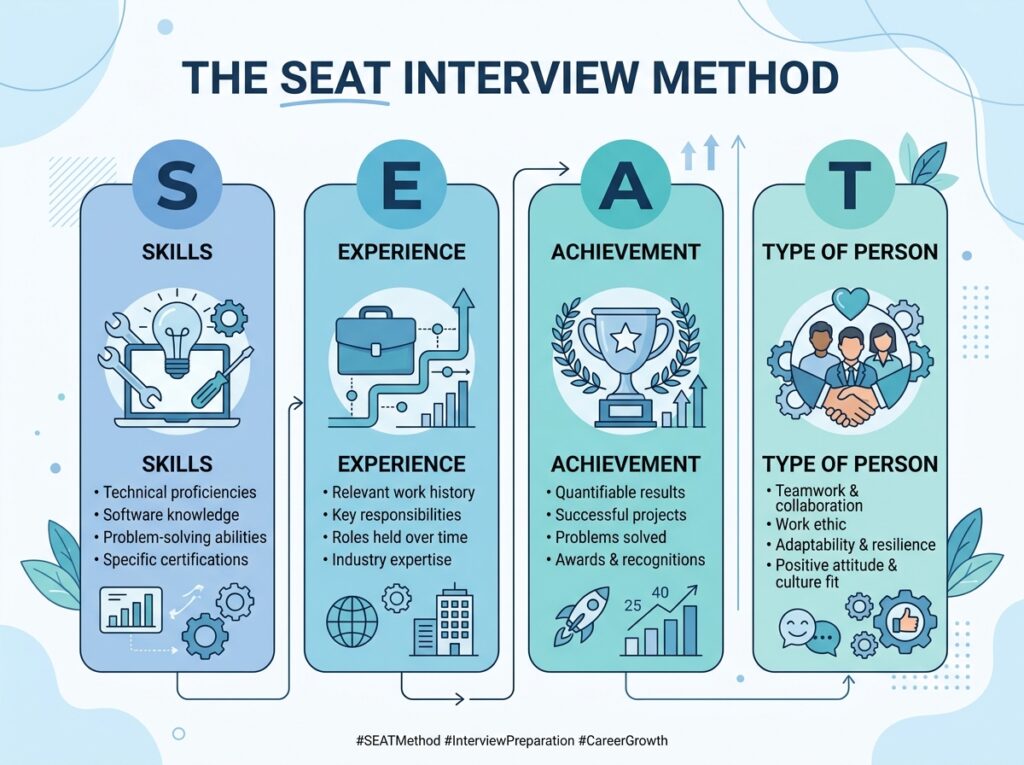
To deliver an impactful response, structure your answer using the SEAT framework:
- S — Skills: Highlight core skills relevant to care, such as communication, patience, and crisis management.
- E — Experience or Education: Summarize your background in people-focused settings.
- A — Achievement: Share a concrete example where your support improved a service user’s quality of life.
- T — Type of Person: Define your personal values and commitment to care standards.
High-Scoring Sample Answer:
“Thank you for this opportunity. My skills are a strong match for a social care worker role: I am compassionate, calm under pressure, and dedicated to supporting people with dignity while keeping safety as a top priority.
In terms of experience, I have worked in people-focused environments where clear communication and trust are essential. I am confident managing daily routines, encouraging independence, keeping accurate records, and collaborating with families and healthcare professionals.
Regarding achievements, in my previous position, I was recognized for supporting a service user who experienced heightened anxiety during personal care routines. By maintaining a consistent routine, offering clear choices, and strictly following their care plan, I helped them feel reassured. Over time, their distress decreased significantly, and care was completed cooperatively.
If hired, you will get a patient, professional team member committed to safe, person-centered care and upholding agency procedures.”
If you want to strengthen your foundational knowledge or gain recognized credentials before your interview, explore our professional training courses to enhance your CV.
2. Explain Your Motivation Without Generic Clichés
When interviewers ask why you chose a social care career, replying with “I just want to help people” is insufficient. Social care involves strict professional boundaries, detailed documentation, and supporting individuals on their most difficult days. Panels want to see that you understand these practical realities.
Core Elements of an Authentic Motivation Answer
- Focus on Practical Empowerment: Emphasize helping service users maintain control over their daily lives.
- Acknowledge Safeguarding: State clearly that keeping people safe through accurate recording and care plan adherence is central to your motivation.
- Value Consistency: Highlight how small, consistent actions build long-term trust with service users.
High-Scoring Sample Answer:
“I chose a career in social care because I want to do work that genuinely matters. I enjoy supporting people in practical ways that help them feel safe, respected, and in control of their daily routines.
In social care, small actions make a significant impact—being consistent, actively listening, and offering choices so individuals retain their independence where possible. I am entirely comfortable with the professional responsibilities that come with this work. I take safeguarding seriously, strictly follow care plans, and understand that accurate documentation is essential for delivering safe, high-quality care.”
3. Respond to Challenging Behavior with De-Escalation Strategies
Challenging behavior in social care often stems from unaddressed pain, confusion, sensory overload, or anxiety. Panel members ask this question to ensure you will not react with frustration or strict discipline, but rather prioritize safety and dignity.
[Trigger Identified] ──> [Stay Calm & Give Space] ──> [Consult Care Plan] ──> [De-Escalate / Redirect] ──> [Document & Report]
Key Steps to Cover in Your Answer:
- Maintain Safety & Tone: Keep your voice steady, lower your body language, and avoid matching the service user’s emotional intensity.
- Identify Root Causes: Check for underlying triggers such as changes in routine or discomfort.
- Follow Established Protocols: Reference the individual’s risk assessment and care plan.
- Document and Report: Emphasize accurate record-keeping following the incident to prevent future occurrences.
High-Scoring Sample Answer:
“First, I stay calm and focus on immediate safety. I give the individual adequate physical space, keep my tone steady, and avoid arguing or escalating emotions. I immediately look for potential triggers, such as physical pain, confusion, or sudden routine changes.
I follow the service user’s care plan and risk assessment guidelines, offering simple choices and gentle reassurance to help them regain a sense of control. If appropriate, I redirect them to a safe, quiet activity.
If the situation escalates or poses a safety risk, I request assistance from a colleague immediately and follow agency emergency procedures. Once the environment is secure, I document the event accurately and report it to the senior staff member on shift so our team can review triggers and update care strategies.”
4. Structure Behavioral Questions with the STARR Method
Behavioral questions—such as “Tell us about a time you handled a difficult situation”—require structured storytelling. Use the STARR method to keep your answer focused:
- S — Situation: Contextualize the event briefly.
- T — Task: Define your responsibility during the incident.
- A — Action: Detail the specific steps you took to manage the situation safely.
- R — Result: Share the positive resolution achieved.
- R — Reflection: State what you learned and how it reinforces your professional care practice.
High-Scoring Sample Answer:
(Situation & Task): “In my previous role, a service user became distressed following an unexpected change to their schedule, shouting and refusing support, which began unsettling others nearby. My task was to de-escalate the situation, protect everyone’s safety, and uphold the individual’s dignity following our care guidelines.
(Action): I remained calm, gave the person physical space, and used slow, reassuring language without trying to debate them in the moment. I removed potential hazards from the immediate area and asked a colleague to stand by for support. I offered simple choices to help the person feel in control, and once they began to settle, I guided them gently to a quieter room following their individual care plan.
(Result & Reflection): The situation de-escalated safely without harm to anyone, and the environment returned to normal. I documented the event in detail and reported the specific trigger to the senior on shift. My supervisor commended me for managing the situation professionally and keeping precise records. This experience reinforced how critical it is to remain steady under pressure and adhere strictly to care plans during stressful moments.”
Frequently Asked Questions
Focus on person-centered care, safeguarding, respecting service user dignity, promoting independence, maintaining professional boundaries, and strictly following care plans and risk assessments.
Use the SEAT or STAR framework to draw on transferable skills from customer service, education, volunteering, or family caregiving. Highlight active listening, calm crisis handling, reliability, and teamwork
The STAR method covers Situation, Task, Action, and Result. The additional ‘R’ stands for Reflection, where you explain what the experience taught you and how it aligns with the employer’s organizational values.